OUR RESEARCH
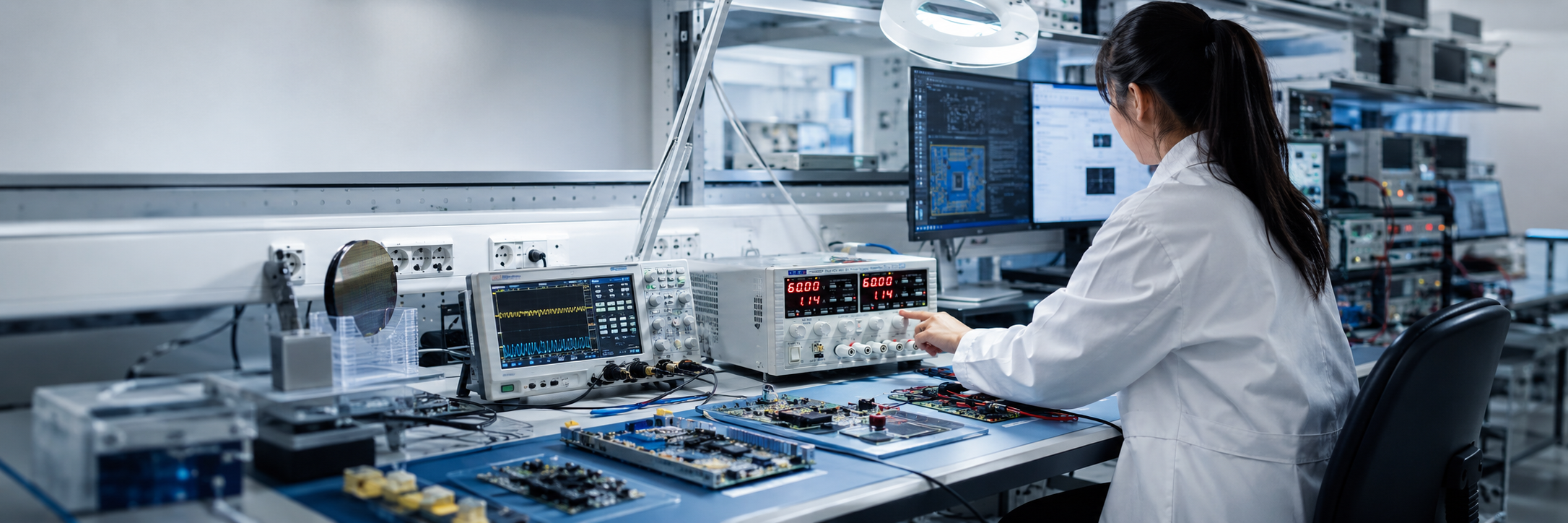
One of the key challenges in next-generation electronics is achieving high performance while maintaining mechanical flexibility and environmental stability. Conventional electronic systems often rely on rigid materials and complex fabrication processes, limiting their application in emerging technologies such as flexible, wearable, and large-area devices.
Our research focuses on organic and polymer-based materials to overcome these limitations. By utilizing their solution-processability, mechanical compliance, and tunable electrical properties, we aim to develop electronic systems that can operate reliably under diverse conditions. Through this approach, we seek to bridge the gap between material design, device performance, and real-world applications.
ORGANIC ELECTRONICS
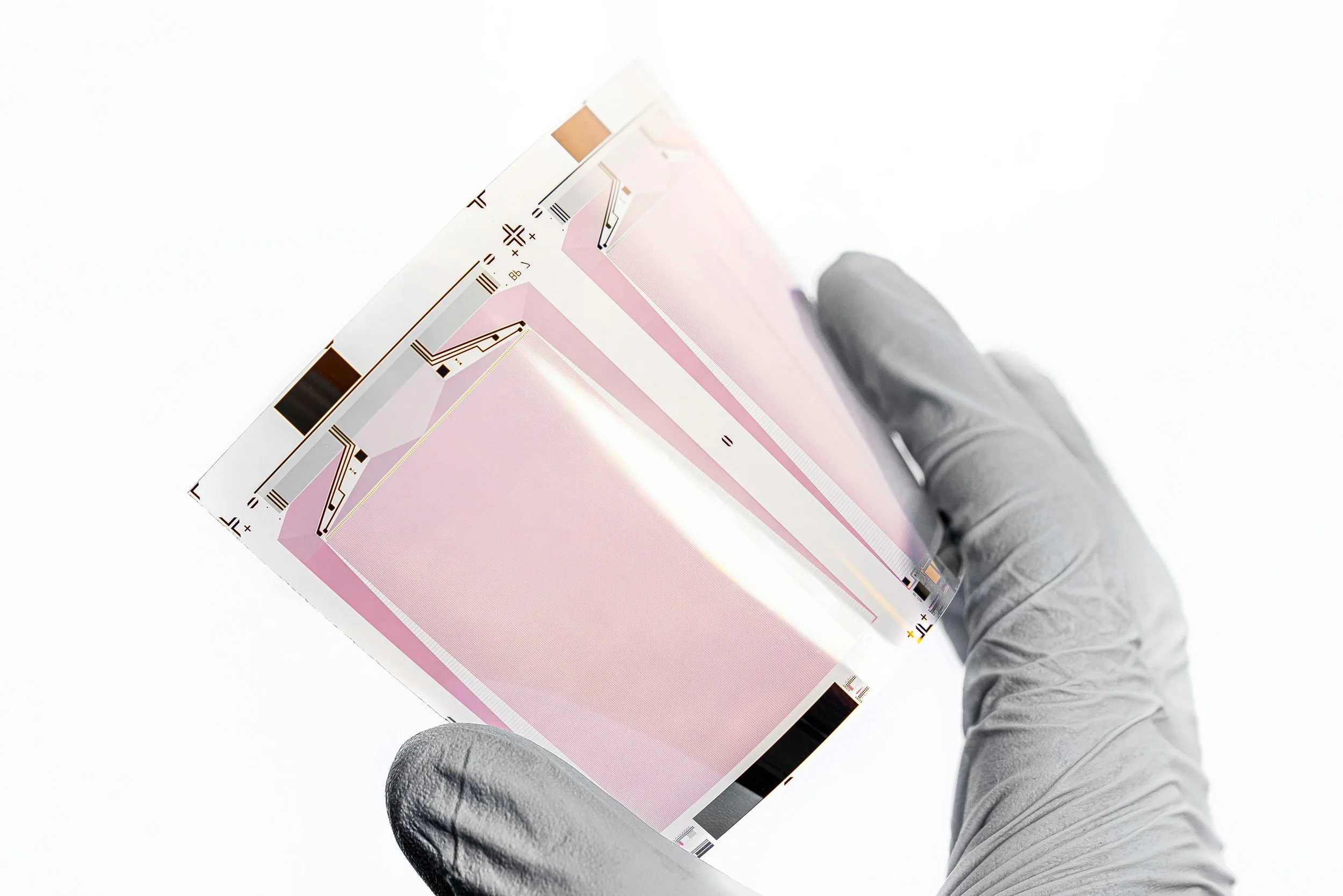
Our research explores the design, processing, and integration of organic electronic materials and devices, including transistors, photodetectors, energy storage systems, and semiconductor processes.
Organic field-effect transistors (OFETs) offer mechanical flexibility, solution-processability, and compatibility with low-temperature fabrication, making them suitable for flexible displays and bio-integrated systems. Organic photodetectors (OPDs) enable applications in imaging, wearable sensors, and biomedical monitoring. In energy storage, conductive polymers such as PEDOT:PSS exhibit mixed ionic–electronic conductivity, suppressing dendrite formation and improving cycling stability in batteries.
We also investigate advanced photolithography materials, where polymer-based photoresists enable precise pattern transfer for high-resolution semiconductor devices. In addition, epoxy-based encapsulation materials are developed to enhance device stability by protecting against moisture, oxygen, and mechanical stress.
Through the integration of materials design, processing, and device engineering, we aim to develop high-performance, reliable, and scalable electronic systems for next-generation technologies.
SENSORS & CIRCUITS
SYNTHESIS, PROCESSING, AND MIXED CONDUCTION
Organic field-effect transistors (OFETs) are electronic devices that operate by modulating charge transport at the semiconductor–dielectric interface. Different from electrochemical transistors, these field-effect devices rely on charge accumulation at interfaces rather than bulk ionic doping. Our group studies these devices, their active materials, and investigates how molecular ordering, processing conditions, and interfacial properties influence device perform.
ORGANIC FIELD-EFFECT TRANSISTORS
Organic photodetectors (OPDs) are optoelectronic devices that convert light into electrical signals using organic semiconductors. Our research focuses on the design and fabrication of OPDs and investigates how thin-film morphology and interfacial engineering affect device performance. We develop various high-performance OPDs, including polarization-sensitive, air-stable, stretchable, and near-infrared (NIR) devices, while exploring new platforms to expand their functionality and reliability under mechanical deformation.
ORGANIC PHOTODETECTORS
STRETCHABLE CONDUCTING POLYMER THIN FILMS FOR WEARABLE BIOELECTRONICS
Wearable bioelectronic devices require soft, conductive materials that maintain stable performance under mechanical deformation. Our research focuses on conducting polymer thin films and examines how ionic interactions, additives, and processing conditions affect electrical conductivity, stretchability, and interfacial adhesion. Based on this, we develop mechanically robust, highly conductive films and integrate them into wearable bioelectronic devices for stable physiological signal monitoring.

APPLICATIONS
SYNTHESIS, PROCESSING, AND MIXED CONDUCTION
Organic electronic devices such as OFETs and OPDs enable lightweight, flexible, and solution-processable systems for next-generation electronics. These devices can be applied to flexible displays, wearable sensors, and bio-integrated systems, offering advantages in large-area fabrication and mechanical deformability.
ORGANIC ELECTRONIC DEVICES
CONDUCTIVE POLYMER-BASED ENERGY SYSTEMS
Conductive polymers such as PEDOT:PSS exhibit mixed ionic–electronic conductivity, enabling stable charge transport in energy storage devices. They suppress dendrite formation and accommodate electrode volume changes, improving battery safety, cycling stability, and lifespan.
Polymer-based photoresists and related materials play a critical role in photolithography for precise pattern transfer in semiconductor devices. Advanced material design improves resolution, sensitivity, and etch resistance, supporting high-density and next-generation fabrication technologies.
SEMICONDUCTOR PROCESSING & MATERIALS
Encapsulation materials, particularly epoxy-based systems, protect devices from moisture, oxygen, and mechanical damage. These materials enhance long-term stability and reliability, especially in flexible and stretchable electronic systems.
DEVICE STABILITY & ENCAPSULATION
Organic and thin-film electronic devices enable soft, flexible platforms for wearable and implantable bioelectronics. These systems can be used for physiological signal monitoring and bi-directional interfacing with biological tissues, expanding applications in healthcare and biomedical engineering.
BIOELECTRONIC APPLICATIONS